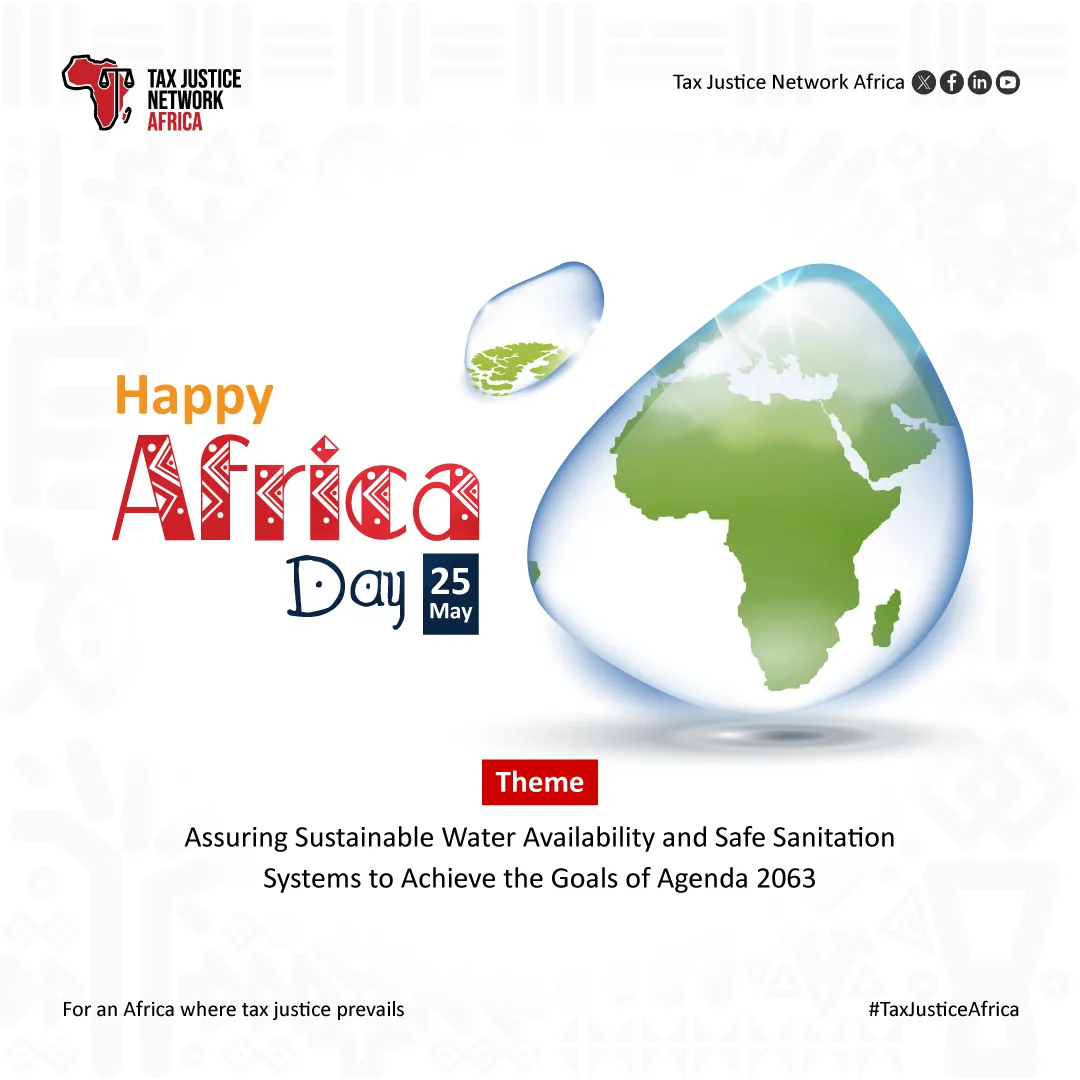
As Africa commemorates Africa Day 2026 under the theme, “Assuring Sustainable Water Availability and Safe Sanitation Systems to Achieve the Goals of Agenda 2063,” the continent is reminded that sustainable development cannot be achieved without equitable access to essential public services.
Access to water and sanitation is often framed as a technical or infrastructure challenge, yet at its core, it is a financing challenge. Investments depend heavily on effective, fair, and progressive taxation systems; systems that enable countries to mobilise their own resources for development.
However, Africa continues to lose billions of dollars annually through illicit financial flows (IFFs), tax avoidance, and harmful tax practices, depriving governments of the very resources needed to deliver essential services such as clean water.
For many African countries, limited fiscal space continues to undermine investments in essential services. IFFs continue to drain critical public resources from the continent and weaken governments’ ability to finance resilient water infrastructure, sanitation systems, and climate adaptation programmes.
According to the African Union’s Agenda 2063, Africa’s transformation depends on strong institutions, inclusive growth, and sustainable management of natural resources. Achieving these goals requires fair and effective tax systems that enable governments to mobilise domestic resources and invest in public goods that improve people’s lives.
At Tax Justice Network Africa (TJNA), we believe that tax justice is central to achieving water justice and sustainable development across the continent. Progressive and transparent tax systems are critical in ensuring that governments have the revenue needed to fund healthcare, education, climate resilience, and public infrastructure, including water and sanitation systems.
“Financing a just transition is not merely a technical exercise but a question of political will and distributive justice. For African countries to chart sovereign pathways toward climate resilience, they require progressive taxation, reform of harmful tax incentives, transparent revenue governance, and regional cooperation,” TJNA’s Policy Officer, Ms. Gloria Majiga, notes.
Africa Day 2026 strengthens calls to confront not only water scarcity, but also the structural injustices that limit Africa’s ability to finance its own development. The continent cannot achieve sustainable water access while billions continue to leave Africa through tax abuse and financial secrecy. Reclaiming Africa’s wealth is essential to financing the services and infrastructure required to build resilient communities and equitable economies.
As discussions on international tax cooperation continue at the United Nations, African countries must continue pushing for a more inclusive global tax system that reflects the needs and priorities of developing economies. Strengthening Africa’s voice in global financial governance remains essential for securing long-term development financing.
This Africa Day, the call for unity and transformation must also become a call for economic justice. Ensuring sustainable water availability and safe sanitation systems will require commitment, and fair financing systems that allow African countries to retain and invest their resources for the benefit of their people.
TJNA, together with its partners, is committed to a prosperous, resilient, and self-sustaining Africa where the continent’s wealth works for Africans.
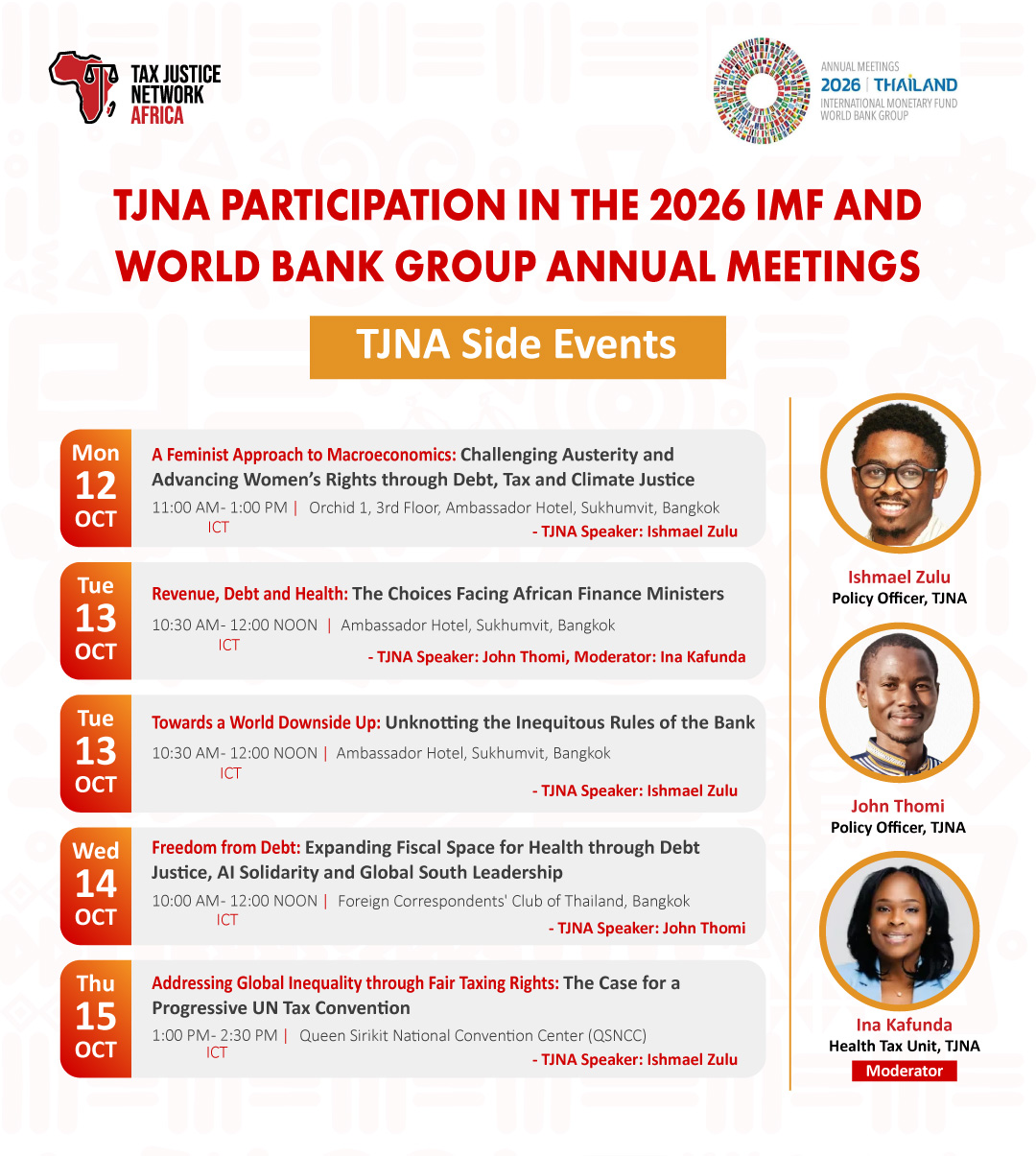
For more information about TJNA’s participation at the AMI 2026, please contact Gloria Majiga at gmajiga[@]taxjusticeafrica.net.
