
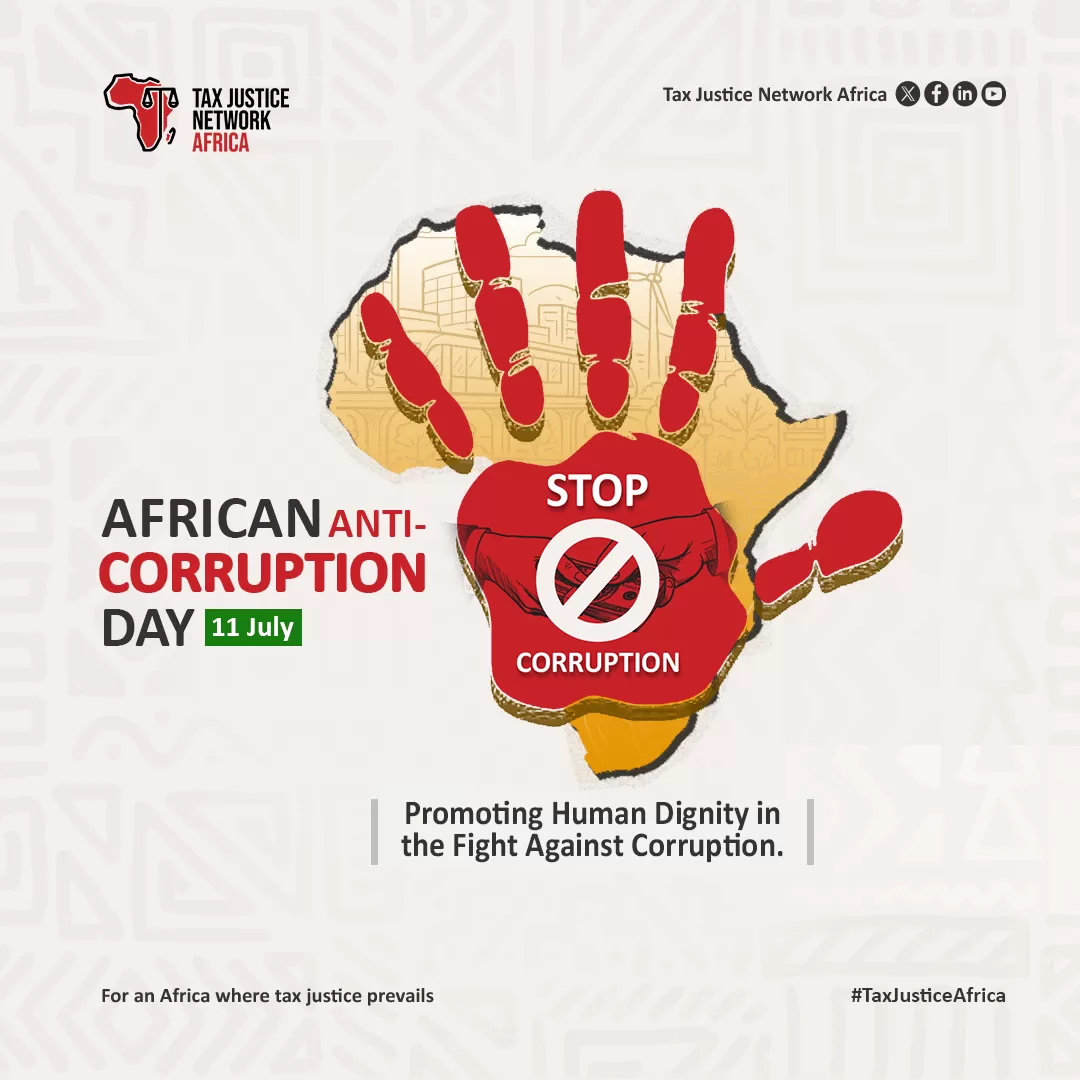
11 July 2025 marks the annual African Anti-Corruption Day, a day established by the African Union to commemorate the adoption of the AU Convention on Preventing and Combating Corruption.
This year’s theme, “Promoting human dignity in the fight against corruption,” calls on African governments, civil society, and citizens to recognise that corruption is not just a governance issue but also a profound human rights concern.
Corruption erodes trust in public institutions, denies citizens access to essential services, and deepens inequalities. For millions of Africans, it means poor healthcare, failing schools, unpaid salaries, and broken systems. To truly understand the full scale of the problem, we must look beyond bribery and embezzlement to the systemic enablers that continue to drain Africa’s wealth.
While the public narrative often focuses on corrupt individuals and public sector mismanagement, the bigger story lies in the shadows of illicit financial flows (IFFs) and profit-shifting by multinational corporations. TJNA’s Communications Officer, Mercy Kamau notes in her recent blog that, "Africa’s public services face a more significant threat than corruption: the unchecked outflow of resources by multinationals," the true cost of financial injustice goes far beyond what is visible.
Africa loses over $88.6 billion annually to IFFs, an amount that dwarfs both foreign aid and the estimated losses from corruption. These systemic losses, driven by exploitative tax practices and a permissive global financial system, severely undermine human development and violate the dignity of African citizens who are left without essential services.
To preserve and protect human dignity, we must build institutions that are transparent, accountable, and inclusive. Weak institutions do not merely allow corruption to flourish; they also fail the very people they are meant to serve.
As emphasised during Africa Public Service Day 2025, agile and resilient public institutions are not just technical necessities; they are moral imperatives. When institutions operate fairly and efficiently, they help deliver the promise of social justice and human rights.
At TJNA, we believe that transparency is a foundational step in the fight for justice. Without transparency, governments cannot be held accountable, and citizens continue to suffer the consequences of untraceable corruption and corporate tax abuse.
TJNA remains committed to supporting these actors with research, advocacy, and platforms that elevate citizen voices and drive policy change. As we commemorate African Anti-Corruption Day 2025, TJNA calls on governments, institutions, and citizens to demand more: more transparency, more integrity, and more justice. We must reclaim Africa’s wealth and ensure it is used to serve its people.
By promoting dignity in governance, we don’t just fight corruption; we build a fairer, freer, and more empowered Africa.
Related articles:
For further information please contact Mercy Kamau at mkamau@]taxjusticeafrica.net.
