


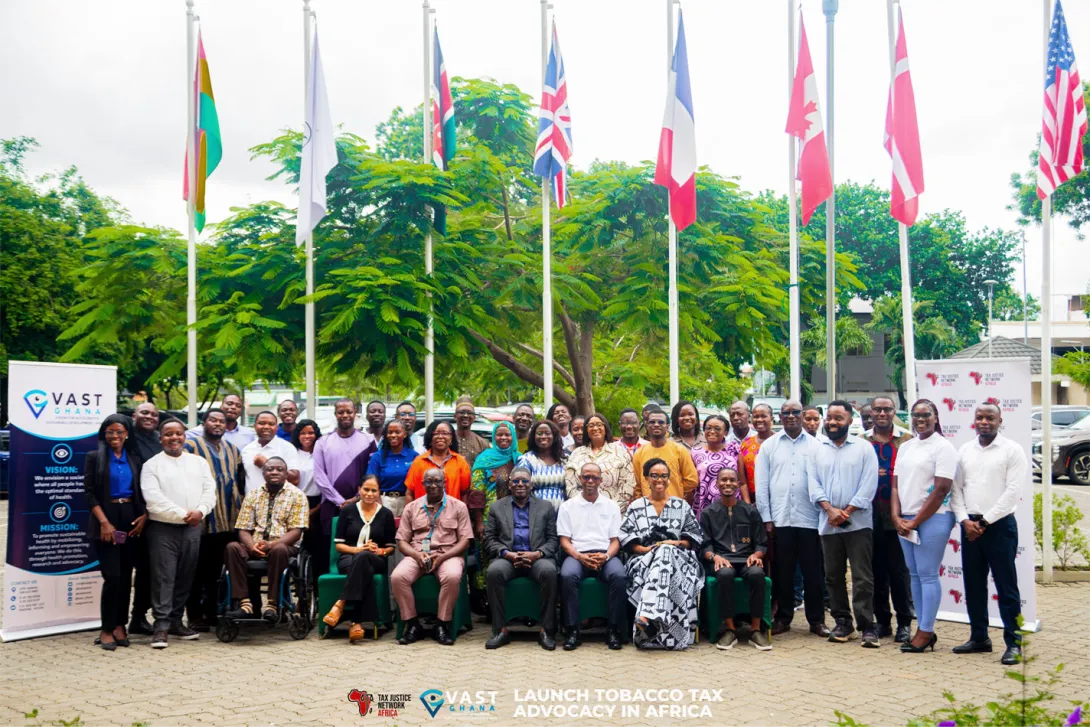
Tax Justice Network Africa (TJNA), in partnership with Vision for Accelerated Sustainable Development Ghana (VAST Ghana), officially launched Phase III of the Tobacco Tax Advocacy in Africa (TTAA) Project during a high-level stakeholder meeting held in Accra, Ghana, on 4 June 2026.
Held under the theme “Strengthening Tobacco Taxation and Tobacco Control for Improved Public Health and Domestic Resource Mobilisation in Ghana,” the meeting brought together representatives from government institutions, civil society organisations, development partners, academia, and public health advocates to strengthen collaboration on tobacco control and health financing.
The launch comes at a critical time when Ghana continues to face growing health and economic costs associated with tobacco use. Stakeholders noted that tobacco taxation remains one of the most effective evidence-based measures for reducing tobacco consumption, preventing non-communicable diseases (NCDs), and generating sustainable domestic resources for health.
In her opening remarks, TJNA Executive Director Ms Chenai Mukumba highlighted the dual benefits of health taxes.
“Health taxes, including tobacco excise taxes, provide a unique opportunity to simultaneously improve health outcomes and generate sustainable domestic revenues,” she noted.
Ms Mukumba highlighted the role of health taxes in reducing the consumption of harmful products while generating additional resources to strengthen healthcare systems and support national development priorities. She noted that effective tobacco taxation sits at the intersection of public health, fiscal policy, and sustainable development.
The TTAA Project seeks to generate evidence, strengthen policy dialogue, and support reforms that reduce the affordability of tobacco products while increasing public revenues to strengthen health systems and prevention efforts.
Welcoming the participants, VAST Ghana Executive Director, Mr Labram Musah, acknowledged the role of partnerships in advancing tobacco taxation reforms and public health advocacy in Ghana. He noted that collaboration with TJNA has contributed to evidence generation and policy engagement, including efforts that supported the passage of the Excise Duty Amendment Bill.
Mr Labram further called for stronger cooperation among stakeholders to address the growing burden of NCDs and secure sustainable health financing.
“We must eschew working in silos. The time has come for genuine multisectoral collaboration between health and finance, between government and civil society, between national and global actors.” He noted.
Panel discussions explored key issues relating to tobacco taxation, sustainable health financing, illicit trade, and evidence-based policymaking.
Participants emphasised that health taxes present an opportunity to generate predictable domestic resources for healthcare while reducing the consumption of harmful products. Discussions also highlighted the need for stronger political commitment to translate evidence into policy action and ensure that health financing mechanisms remain sustainable.
Stakeholders further examined the challenge of illicit tobacco trade, noting that stronger enforcement and improved coordination among regulatory agencies remain essential for protecting public health and safeguarding government revenues.
During the discussion, TJNA’s Policy Officer, Mr John Thomi, highlighted both the progress and the challenges facing tobacco control efforts across Africa.
“Most African countries already have policies that are good enough and strong enough, but enforcement remains a challenge,” he said.
Thomi emphasised the importance of generating evidence, strengthening the implementation of existing policies, and enhancing regional cooperation to address illicit trade and strengthen tobacco taxation reforms across the continent.
Representatives from the Ghana Revenue Authority (GRA) reaffirmed their commitment to administering excise taxes effectively, supporting efforts to reduce the consumption of harmful products, and mobilising resources for national development and healthcare financing.
Officially launching the project on behalf of the Minister of Health, Dr. Hafiz Adams, Director of Technical Coordination at Ghana’s Ministry of Health, described the initiative as a timely response to the growing burden of non-communicable diseases and the need for sustainable health financing.
“The vision and mission behind this initiative is both simple and compelling: to create a win-win outcome for public health and national development by reducing the consumption of products that contribute to disease and premature deaths, while at the same time generating additional domestic resources.”
Dr Adams further noted that prevention remains one of the smartest investments governments can make, and he highlighted the importance of evidence-based policymaking, strong partnerships, and sustained advocacy in advancing public health goals.
The launch of Phase III of the TTAA Project marks an important step in strengthening tobacco taxation and tobacco control efforts in Ghana.
As the meeting concluded, TJNA and the stakeholders reaffirmed their commitment to advancing evidence-based advocacy, strengthening tobacco control measures, and fostering cross-sector collaboration to improve public health and support sustainable domestic resource mobilisation in Ghana.
For more information about the Tobacco Tax Advocacy in Africa project please contact John Thomi at jthomi[@] taxjusticeafrica.net
