



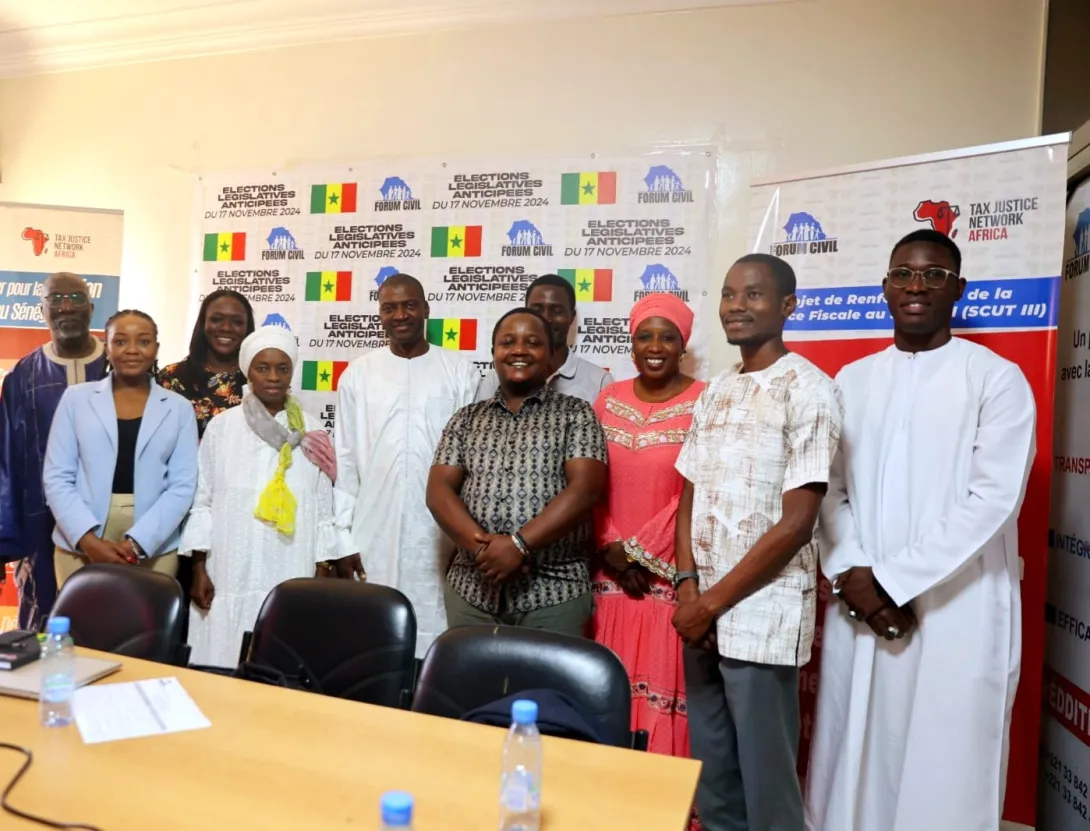
Tax Justice Network Africa (TJNA) recently conducted a monitoring mission in Senegal from 24 to 28 March 2026 under the Tobacco Tax Advocacy in Africa (TTAA) project, reaffirming strong national momentum toward tobacco tax reform while highlighting structural constraints that continue to shape policy direction.
The mission, carried out in partnership with Forum Civil and the Consortium pour la Recherche Économique et Sociale (CRES), engaged a wide range of stakeholders, including government agencies, civil society organisations, research institutions, and parliamentary actors, to assess progress, strengthen coordination, and identify opportunities for advancing tobacco taxation policy.
Senegal has made notable progress in tobacco taxation, including a significant increase in the ad valorem tax rate from 70 per cent to 100 per cent. This policy shift reflects strong political commitment at the highest levels of government and has contributed to increased tobacco prices, supporting both public health and revenue mobilisation objectives.
However, despite this progress, the mission found that Senegal’s tobacco tax system remains heavily reliant on ad valorem taxation. This limits the policy’s overall effectiveness, particularly in reducing the affordability of tobacco products, as the tobacco industry can adjust pricing strategies to absorb tax increases. Efforts to transition to a more effective mixed or specific excise tax system remain constrained by regional tax harmonisation requirements under the West African Economic and Monetary Union (WAEMU), which restrict the scope for unilateral national reforms.
Discussions with key stakeholders, including the National Tobacco Control Programme and the Senegal Revenue Authority, highlighted the need to strengthen existing tax measures while navigating regional policy frameworks. While there is growing recognition of the importance of more effective tax structures, any significant reform is likely to require coordinated action at the regional level.
Civil society organisations, including the Ligue Sénégalaise Contre le Tabac (LISTAB), continue to play a critical role in advancing tobacco control efforts. Strong collaboration between government, parliament, and civil society has supported advocacy, public awareness, and monitoring of tobacco industry interference, which remains persistent, albeit increasingly subtle.
A key policy development emerging from the mission is the ongoing parliamentary review of a proposed parafiscal tax, which aims to establish dedicated funding mechanisms for tobacco control. This approach offers a promising pathway to address current limitations in earmarking tax revenues, as direct allocation from central tax revenues remains challenging under existing systems.
The mission also highlighted the need for stronger evidence-based advocacy, including improved data, tax modelling tools, and research to support policy reform. Addressing data gaps and strengthening analytical capacity will be critical in advancing more effective and coordinated tobacco taxation policies across the region.
While Senegal’s progress demonstrates growing political will and policy momentum, the mission highlights that sustained advocacy, regional coordination, and strengthened evidence will be essential to achieving more impactful and equitable tobacco tax reforms across the continent.
For more information, please contact John Thomi at jthomi[@]taxjusticeafrica.net
