


At the core of these negotiations on the UN Framework Convention on International Tax Cooperation (UNFTIC) is the question: “How should taxing rights be allocated between residence and source jurisdictions to reflect current economic realities and promote equitable outcomes?” This question matters to African countries because it affects domestic revenue mobilisation and fiscal sovereignty.
Discussions at the UN Tax Convention negotiations substantiate that this question, though contested, is central. Fair allocation of taxing rights is covered under the current Article 5 of the Framework Convention, which acknowledges that jurisdictions, “where value is created, markets are located, revenues are generated or economic activities take place, have a right to tax”.
This conceptualisation reflects a shift from a tax system that was skewed towards residence-based allocation to recognition of factors such as the location of markets which gives the source jurisdiction greater taxing rights. Nevertheless, disagreements among member states at the UN Tax Convention sessions persist. Many developed countries, that are residence jurisdictions, oppose any binding obligations, while the Africa Group, supported by countries such as Ghana, Kenya, and Nigeria, advocate for a framework convention that reflects the economic contribution.
Fair allocation of taxing rights in the current international tax architecture
The existing international tax framework allocates taxing rights over business profits to residence jurisdictions. This approach traces its origins to erstwhile bilateral efforts to solve the issue of double taxation. The first known Double Taxation Avoidance Agreement (DTAA), signed on June 21, 1899, between the Austro-Hungarian Empire and Prussia, was seminal. The purpose of the agreement was to allocate fair taxing rights when multiple jurisdictions claimed the same income. The issue of double taxation prompted the League of Nations to develop model frameworks after the First World War, which guided the development of modern tax treaties.
Several DTAAs have since emerged and are modeled on frameworks such as the OECD Model Tax Convention, the United Nations (UN) Model Double Taxation Convention, and the ATAF Model Tax Agreement. Residence-based taxation is a rule espoused in the OECD Model, which uses physical presence as the determinant for taxation. Where economic activity has occurred within a jurisdiction, that jurisdiction is restrained from taxing the resulting profits. African economies operate as capital-importing jurisdictions. As a result, they host major economic activities yet receive a limited share of taxable income.
The exception is where Multinational Enterprises (MNEs) maintain Permanent Establishments (PEs) in the source country. This rule relies on physical presence as the determinant for taxation. Where economic activity has occurred within a jurisdiction, that jurisdiction is restrained from taxing the resulting profits. African economies, which function as capital-importing jurisdictions, host significant economic activities yet receive a limited share of taxable income.
Unlike the OECD Model, the UN Model Convention adopts a more source-oriented approach to allocation of taxing rights. It expands taxing rights for source jurisdictions through broader PE definitions and higher withholding tax allowances. Several African countries use both the ATAF and UN model in treaty negotiations. Even with the use of the two models instead of the less favourable OECD Model, bargaining asymmetries during negotiations sometimes leads to agreements that continue to restrict source-based taxation.
The consequences of these imbalances are well established. MNEs shift profits through transfer pricing, intra-group financing, and the strategic placement of intangible assets. These practices affect tax bases in developing countries. Base erosion and profit shifting reduce corporate tax revenues in developing countries by a larger proportion of GDP compared to developed countries1. This limitation becomes more pronounced in a digitalised economy, where physical presence no longer reflects where value is created.
These changes align with positions advanced by the Africa Group, which highlight that taxing rights should reflect where value is created, markets are located, and economic participation occurs. Expanding nexus in this way would allow African countries to capture a fairer share of tax revenue from increasingly digitalised business models.
Reforming the allocation of taxing rights
Based on the foregoing, a fair allocation of taxing rights requires reform in three areas:
First, addressing outdated nexus rules. The UN Tax Convention should establish minimum source taxing rights over income derived from substantial economic activity within a jurisdiction. This reform should go beyond strict reliance on physical presence and recognize sustained economic participation as a basis for taxation. It should also address the legacy of existing double taxation agreements, including whether states should be required to renegotiate such treaties. The Convention should include a clear legal rule that its minimum standards prevail over inconsistent treaty provisions through a compatibility clause or a coordinated multilateral amendment process.
Second, nexus rules must reflect digitalization and incorporate measurable indicators of economic engagement such as revenue thresholds and user participation. This approach ensures that jurisdictions can tax enterprises that derive substantial income from their markets even in the absence of physical presence. It also aligns taxing rights with the realities of digital business models, where value is created through user interaction, data generation, and market engagement.
Third, profit allocation rules must be reconsidered. The arm’s length principle, which remains the dominant method for allocating profits within MNEs, has not adequately protected African tax bases. Its application depends on access to reliable comparables, technical expertise, and extensive data, resources that are often limited in many African countries. In addition, MNEs hold more information about their internal operations, which makes effective enforcement difficult. These structural limitations point to the need for alternative approaches. Unitary taxation with formulary apportionment is an alternative approach that can be applied. Unitary taxation treats an MNE as a single economic entity rather than a collection of separate affiliates. Instead of pricing transactions between related entities, it consolidates global profits and allocates them based on objective indicators such as sales, assets, and employment. These indicators reflect where real economic activity takes place and where value is created.
Why this matters
For African countries, this approach offers several advantages; it reduces dependence on complex transfer pricing rules and minimises disputes over comparables, which are often unavailable or unreliable. It also limits opportunities for profit shifting by reducing the scope for manipulating intra-group transactions or relocating intangible assets to low-tax jurisdictions. Formulary apportionment can produce a more stable and predictable tax base.
At the same time, implementation requires careful design. Agreement on the allocation formula, weighting factors, and coordination across jurisdictions is essential to avoid double taxation or gaps in taxation. There are also concerns about how different economic structures across countries may affect outcomes under a standardized formula.
Elements of unitary approaches already appear in ongoing international reforms, specifically in discussions on residual profits allocation. The Framework Convention could build on this by incorporating simplified or optional formulary methods suitable for developing countries. Detailed rules could then be developed through protocols of the UN Tax Convention, to allow flexibility and maintenance of a coherent and coordinated approach to profit allocation.
The UN Framework Convention negotiations create an opportunity to address the imbalances in international tax law. A fair allocation of taxing rights for African countries means establishing source-based principles, changing nexus standards to reflect economic participation, and ensuring that profit allocation is not contingent on intricate comparable analysis.
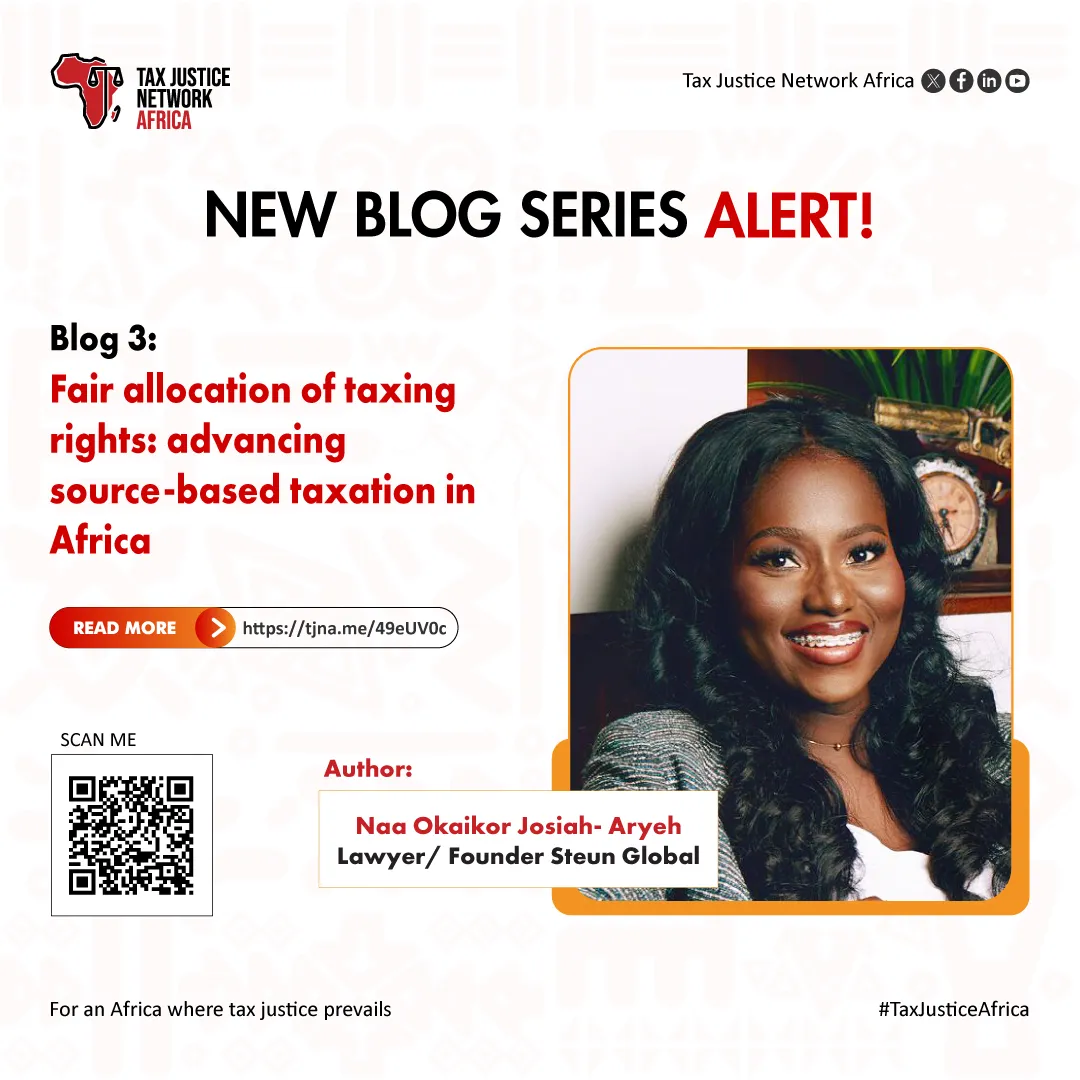
This blog is authored by Naa Okaikor Josiah- Aryeh, Lawyer/ Founder Steun Global.
For more information, please contact Zandile Ndebele at zndebele[@]taxjusticeafrica.net
