A "new" type of summit
For the first time, Nairobi, the English-speaking capital that hosts the Africa-France summit, was at the centre of the new dialogue between France and Africa.
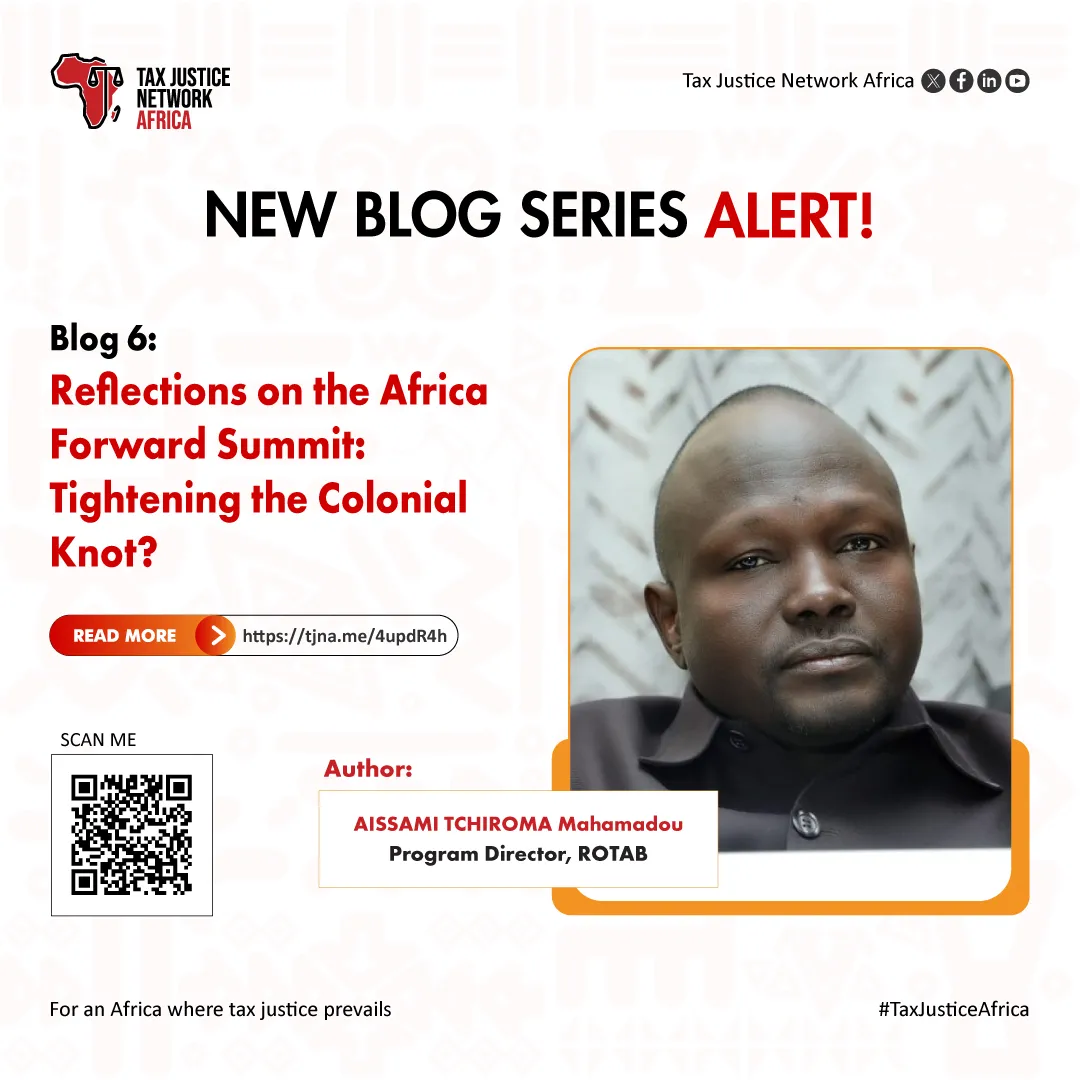
The Africa Forward Summit began on May 11, 2026, in Nairobi with emphasis that this was a new kind of summit with a focus on ‘shared agendas’. In his opening remarks, President Macron of France spoke about Africa and France facing common challenges. Among the ‘common’ challenges that were identified and discussed was the reform of the global financial architecture.
The reform of the global financial architecture is not a new issue. It has been a persistent issue for a while now. Many agendas regarding this issue focus on modernising the financial system based mostly on the agreements with Bretton Woods institutions such as the World Bank and the International Monetary Fund (IMF).
This reform is ultimately meant to ensure that the global financial system responds better to development crises and the climate crises in Africa. Indeed, a United Nations Conference on Trade and Development (UNCTAD) report recognised that it is essential to correct the foundations of the global financial system to overcome years of underperformance, debt dependence, and erosion of confidence. There is therefore an urgent need to accelerate the reform of the global financial architecture.
Wolf in sheep's clothing: French extractivism
In Nairobi, the Africa Forward Summit seemed to posit the same. The Summit proposed a more representative, responsive and development-oriented global financial system, coupled with a coherent African architecture for risk reduction and regional financing. One may be tempted to believe that the summit was positioned as a platform through which Africa and France can promote coordinated action on the reform of the global financial architecture needed for Africa's long-term transformation.
Several statements were made in support of this, and indeed, President Macron announced 23 billion Euros in investment to announce France’s support. But we must beware that this repositioning of France as an ally seems to be the behaviour of the wolf that drapes itself in the skin of the lamb. Taking a closer look at France’s dealings with Africa will lead many to a similar conclusion, especially considering the recent setbacks suffered by France in the central Sahel.
To further analyse this, it is imperative that we understand France's behaviour in its former colonies in Africa or the ‘French backyard’ as popularly known. There are claims that the ‘backyard policy’ is over. Let us concede to France that it has put an end to its policy of the backyard, but it is nevertheless possible to note that the neocolonial and condescending practices of this backyard continue.
Firstly, France exploits the raw materials of the countries that make up the backyard, with the exception of the countries of the central Sahel, namely Burkina Faso, Mali and Niger, from which it was driven out. Precisely in the Sahel, the most common illustration is the exploitation of Niger's uranium. France exploited uranium from Niger from 1970 to 2024, more than half a century.
During this half-century of operations through the French multinational enterprise AREVA, which became ORANO, France never thought of beneficiating from these exploited minerals that were the pride of its nuclear industry and were partly used to light its cities. Not a single tonne has ever been refined in Niger, let alone processed to produce electricity, let alone enriched to develop civil nuclear power.
France mines and transports uranium in the form of uranate. This mineral creates value outside of Africa. Under these circumstances, there was no way that this exploitation could serve as a lever for the creation of wealth and the acceleration of growth in Niger in particular and in Africa in general.
French neocolonialism: monetary policy
Secondly, as we are talking about the reform of the financial architecture, let us look at France's behaviour in terms of the monetary policy of its former colonies. Being a fundamental element of the financial architecture, money is the engine of exchange in the economy. It is also an instrument of economic steering. It can, therefore, rightly be said that money is the cement of any financial architecture.
France still holds fourteen (14) sub-Saharan African countries and the Comoros in monetary slavery using the CFA Franc. These are eight (8) West African countries grouped in the West African Monetary Union – UEMOA (Burkina Faso, Côte d'Ivoire, Benin, Togo, Mali, Niger, Senegal and Guinea-Bissau) and six (6) Central African countries grouped within the Central African Financial Cooperation – CEMAC (Cameroon, Central African Republic, Republic of Congo, Gabon, Equatorial Guinea and Chad).
All of these countries and France constitute what is known as the "franc zone". A zone that uses the CFA franc as its currency, with the exception of France, "master of the game", which uses the Euro and the Comoros, which uses the Comorian franc. It is useful to remember that the CFA franc issued in West Africa is different from the one issued in Central Africa. But it is always the metropolis (France) that is in charge, operating under the same mechanisms and principles that govern the two sub-zones.
The CFA Franc is the Franc of the French colonies in Africa, which later became the Franc for the African financial community. It was created on 25 December 1945 by decree n°45-0136 published in the French Official Journal of 26 December 1945 in its article 3. And yes, you read that right, the CFA is created by France, for France, managed by the French treasury through mechanisms and institutions that are controlled and imposed on the colonies to perpetuate the stranglehold on their wealth. It is curious to note that in 2026, some countries still continue to use this currency that was originally created for their economic and financial enslavement. Even the countries of the Alliance of Sahel States-AES (Burkina Faso, Mali and Niger) that are at odds with France in their sovereignty surge have not yet managed to get rid of this currency.
It is through the franc zone that France continues to keep a stranglehold on the entire economy of these 14 countries, plus the Comoros. This zone is governed by four (4) fundamental principles: the guarantee of unlimited convertibility of the French treasury, the fixity of parities (exchange rates), the free transferability of capital and profits and the centralisation of foreign exchange reserves. These countries of the franc zone have signed three (3) operating account agreements with France, which set out the mechanisms for monetary cooperation.
This principle of the transaction account is of profoundly Nazi origins and was applied for the first time by Hitler's Germany to invade France under the mechanism of clearing. Through this principle, the African currencies of countries that use the CFA are subject to a subtle conservation at the level of the French treasury. This situation has the following consequences, among others: The deprivation of African countries of the strong currencies necessary for their development and the limitation of international trade of African countries with the rest of the world.
It is true that the monetary cooperation agreements linking the member states of the WAEMU zone to France have been reworked as part of the creation of the ECOWAS common currency, a project that is struggling to be carried out because it has been sabotaged by France.
One of the decisions taken on December 21, 2019, in Abidjan concerned the cessation of the centralisation of foreign exchange reserves at the French Treasury, the closure of the operations account and the transfer to the Central Bank of West African States (BCEAO) of the resources available in the account.
On the other hand, the fixed parity (of the exchange rate) against the euro and the guarantee of unlimited convertibility of the currency by France are still maintained. In addition, the printing press is still in Chamalieres in France.
Lack of progressivity in taxation
The third relative point is that the financial architecture remains taxation. In Africa, the tax structure of many countries is inherited from colonialism. Particularly, French-speaking countries have inherited a regressive tax system that affects the poor more instead of taxing multinationals, elites, real profits and wealth.
In Africa, the structure of the colonial economy persists; our states are weak, as a result, they only tax what they can and not what they have the right to tax. France has signed double taxation agreements with its former colonies, which allows its companies, such as ORANO, TOTAL Energie, CARREFOUR, to come and operate without paying their fair share of taxes due in the countries. Only the Alliance of Sahel States have denounced these agreements.
The negotiation process has rightly been initiated for the elaboration of a United Nations Framework Convention on International Tax Cooperation with a view to correcting the injustices suffered by developing countries in the field of international tax cooperation, particularly African countries. Throughout these negotiations, France has not shown support for the different positions towards the interests of African countries.
Unless France intends to work on contributing towards the financial and economic emancipation of its former colonies first, and then support African positions in the negotiation process on the UN Framework Convention on International Tax Cooperation, among other multilateral efforts to reform the global financial architecture, then the Africa Forward Summit risks being just another summit through which the wolf tries to reintroduce himself into the sheepfold!
For more information, please contact Everlyn Muendo at emuendo[@]taxjusticeafrica.net.
