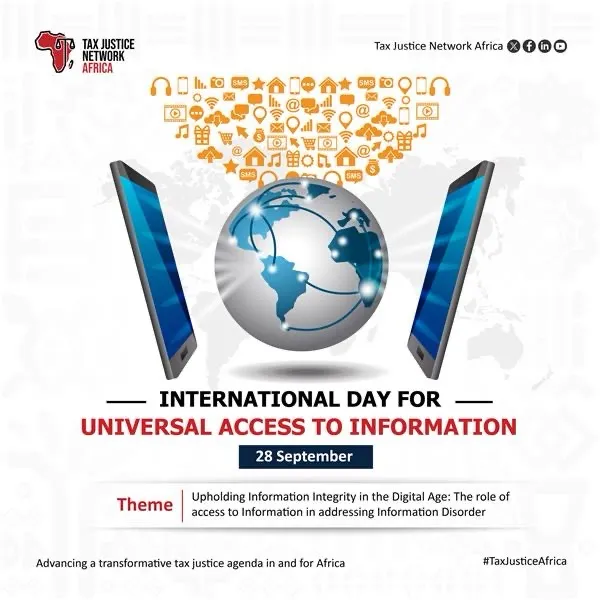
Information is power. When people can access it, they can question decisions, expose abuse and demand better use of public resources. Every year on 28 September, the world marks the International Day for Universal Access to Information, a reminder that people have the right to seek, receive and use information held by public institutions.
For Africa, access to information is not only a democratic right; it is a practical tool for advancing tax transparency, public accountability, and the fight against illicit financial flows. When fiscal information is timely, reliable and usable, citizens, journalists and civil society can follow the money, scrutinise decisions and connect revenue choices to real development outcomes.
Africa loses an estimated US$88.6 billion every year through illicit financial flows. That is money that could strengthen health systems, classrooms, infrastructure and social protection. The figure highlights the scale of resources at risk when financial systems lack transparency and when citizens, journalists and civil society cannot easily trace how public money is raised, allocated, and spent.
Yet critical gaps remain. Information on tax incentives, beneficial ownership, multinational corporate structures, public procurement, extractive-sector agreements and cross-border financial activity is often fragmented, inaccessible or presented in formats the public cannot use. These gaps weaken oversight, hide risk and make it easier for revenue losses and abuse to go undetected.
Information as a tool for tax justice
For TJNA, universal access to information is inseparable from fair and accountable tax systems. Citizens cannot challenge harmful tax incentives, revenue leakages, corporate secrecy or weak enforcement when the evidence they need is hidden, scattered or difficult to use.
“Access to credible and timely information is fundamental to tax justice. Citizens cannot hold governments, corporations or other powerful actors accountable for how wealth is generated, taxed and used if the information they need remains out of reach. Transparency gives people the evidence to ask the right questions, demand accountability and advocate for fairer tax systems,. From the government’s perspective, access to information is equally critical. It enables effective detection and enforcement against tax abuse, strengthens the fight against illicit financial flows, and supports better policy design and revenue mobilisation” noted TJNA Policy Manager Ms Ruth Wamuyu.
Strengthening public oversight
Journalists and civil society organisations are essential to turning data into accountability. Through investigations, data analysis, community engagement and advocacy, they can translate complex tax and financial information into stories and campaigns that show how secrecy affects service delivery, inequality and development.
As African countries work to strengthen domestic resource mobilisation and curb illicit financial flows, access to information must sit at the centre of reform. Public access to budgets, tax expenditure reports, contracts, beneficial ownership registers and extractive-sector data can expose risks, close accountability gaps and build public trust.
On this International Day for Universal Access to Information, TJNA calls for stronger right-to-information laws, proactive disclosure of fiscal data and practical systems that make information usable for citizens, journalists and civil society. Transparency is not an end in itself. It is how people follow the money, demand accountability and push for fairer taxation, stronger public oversight and more accountable development financing across Africa.
For more information, please contact Zandile Ndebele at zndebele@taxjusticeafrica.net.
