In 2025, the United Nations Economic Commission for Africa (UNECA) estimated that Africa needed approximately USD 1.3 trillion to close the Sustainable Development financing gap. The effect of this significant gap is that many African countries will be unable to realise their obligations under the Sustainable Development Goals by 2030. This exacerbates the plight of the vulnerable in society who are also further afflicted by the ever-widening wealth gap. In response, state and non-state actors have been exploring solutions to ease the burden. One such initiative is the Seville Declaration on Domestic Revenue Mobilisation by members of the Addis Tax Initiative, among them African countries, which calls for advancements in progressivity within tax and non-tax revenues and increased cooperation fostering equitable tax systems in order to promote fair tax systems and reduce inequalities. As part of this action, the Seville Declaration champions increasing domestic resource mobilisation capacities through wealth taxation, among other options
The proposals and challenges of implementation
It is clear that African countries need to bridge the financing gap by tapping into other avenues of domestic revenue in a fair and just manner. One of these under-tapped sources of tax revenue is the taxation of High Net Worth Individuals (HNWIs).
Globally, the taxation of HNWIs has attracted much debate and proposals. Some of these proposals include the introduction of progressive scaling of wealth bands, widening the threshold to include centi-millionaires, exit taxes and the recent proposal of a 2% minimum billionaire tax proposed to the G20. While these proposals are a welcome move, some fail to appreciate the nuance of African countries where dollar billionaires and centi-millionaires are fewer and where capacity to trace wealth stored in offshore jurisdictions is leaner.
On close examination of the 2% minimum global tax on HNWIs, for instance, one would not fail to realise that the proposal, in its design, is set to favour developed countries more than developing countries. This is owing to the number of billionaires and centi-millionaires in developed countries vis-à-vis developing countries as well as the limited capacity of revenue authorities in developing countries to address taxation of HNWIs.
Additionally, taxation of HNWIs in the current international tax landscape faces further challenges including the problem of passport mobility and tax residency. Citizenship by investment schemes have enabled many HNWIs to obtain dual and sometimes multiple citizenship which has the potential to distort taxing rights owing to the operation of the residence principle. The residence principle may not be able to deal with the intricacies of HNWIs with multiple citizenships which would allow such persons to move their tax residence to their advantage. This is in addition to the reliance of offshore and secrecy jurisdictions which allow such HNWIs to move their fortunes away from their primary countries of residence/ where the fortunes were sourced.
Some African countries have made strides in the taxation of HNWIs. For example, in 2023 Zimbabwe introduced a 1% annual wealth tax on the value of a dwelling other than a principal private residence where such value exceeds USD 250,000. However, the implementation of this tax has been halted pending the sorting out of ‘administrative modalities’. Largely, many African countries have taxed wealth by levying capital gains tax, property taxes, inheritance taxes and financial transaction taxes. However, the development and implementation of a wealth tax in many African countries has faced or may potentially face several challenges including political resistance, the capacity of revenue authorities, valuation metrics and the existing tax framework.
The role of the UN Framework Convention on International Tax Cooperation in the push for wealth taxes
The UN Framework Convention has the potential to support efforts toward the introduction of wealth taxes particularly in African countries. By rooting for the Framework Convention in the commitment to sustainable development among others, by promoting international tax cooperation which contributes to the balanced realisation of economic, social and environmental sustainable development, the drafters of the Convention can call on state parties to commit to closing the wealth and financing gap. Balanced realisation of economic, social and environmental sustainable development should ensure that the tax systems are fair and just. One of the ways to facilitate such fairness and justice is through the introduction of a progressive wealth tax and recalibrating the existing tax system to allow for reciprocal exchange of information between countries for ease of tracing taxable wealth.
Further, the Framework Convention has the potential to create a fairer international tax system which is cognizant of the role played by HNWI in global tax avoidance and tax evasion. Article 6 which calls on state parties to act on tax avoidance and tax evasion by HNWI creates an opportunity for state parties to restructure their domestic tax systems to allow for participation in the international coordinated approaches to ensure effective and progressive taxation of HNWI. However, one of the hurdles to the realisation of Article 6 is the implementation of international cooperation in the taxation of HNWI. Such cooperation should consider the varying degrees of technical capacities across the Continent and the reality which some countries face, that of individuals owning significantly more resources than entire governments, which creates a mismatch of bargaining power.
Taxation of HNWIs as suggested in the Framework Convention is one of the means through which redistribution of resources can be realised. This proposal is a means to make wealthier individuals pay their fair share of taxes and to contribute equitably to the common pool of resources. Wealth taxes have the potential to address the ever-widening wealth gap and the inequitable tax systems which have resulted in the over-reliance of consumption taxes by African countries which disenfranchises the vulnerable members of society. The heavy reliance on consumption taxes by many African countries in their domestic resource mobilisation efforts exposes the vulnerable members of society to the effects of a potentially regressive resource mobilisation model whereby the poorer populations pay more in taxes as a proportion to their overall income in comparison to their wealthier counterparts. A tax on HNWIs if managed properly, can provide African governments with additional domestic revenue to finance their citizens’ need such as healthcare, education and infrastructure.
A sound wealth tax should be rooted in fiscal legitimacy; the idea that fiscal systems should be based on the principles of transparency, accountability, responsibility, efficiency, effectiveness, justice and fairness. The requirement for transparency would call upon the target class of taxpayers to disclose their sources of wealth and in turn, it would require the reciprocal information sharing between countries to allow for the tracing of wealth that may be moved across jurisdictions as part of tax avoidance schemes. Therefore, in order to introduce a well-designed wealth tax, African states have to leverage international cooperation and the various initiatives introduced to combat base erosion and profit shifting.
Further, governments should embed transparency and accountability within the fiscal system prior to the introduction of a wealth tax. It is paramount that governments put the additional resources to their intended use. Therefore, the administration of the wealth tax should be done transparently and all revenues raised through this channel should be audited and publicized for the information of the general public. The wealth tax should not be treated as quasi-grants to the government by the wealthy but rather, as a revenue stream channeled into the common pool of resources from which the government’s operations are funded. Responsibility, efficiency and effectiveness call for the tax authorities to ensure that the administration of the wealth tax is done efficiently and that the imposition of the tax does not result in an unnecessary compliance cost on the taxpayer.
Conclusion
Wealth taxes present an opportunity to wean African tax systems off of over-reliance on consumption taxes and to introduce vertical equity within these tax systems. However, the imposition of these taxes should be done in a fiscally just manner, taking into account the principles of fiscal legitimacy. The Framework Convention presents an opportune moment for members of the African Group to push for a coordinated international approach to wealth taxation particularly noting the loss suffered by many African states to tax evasion and tax avoidance by HNWI.
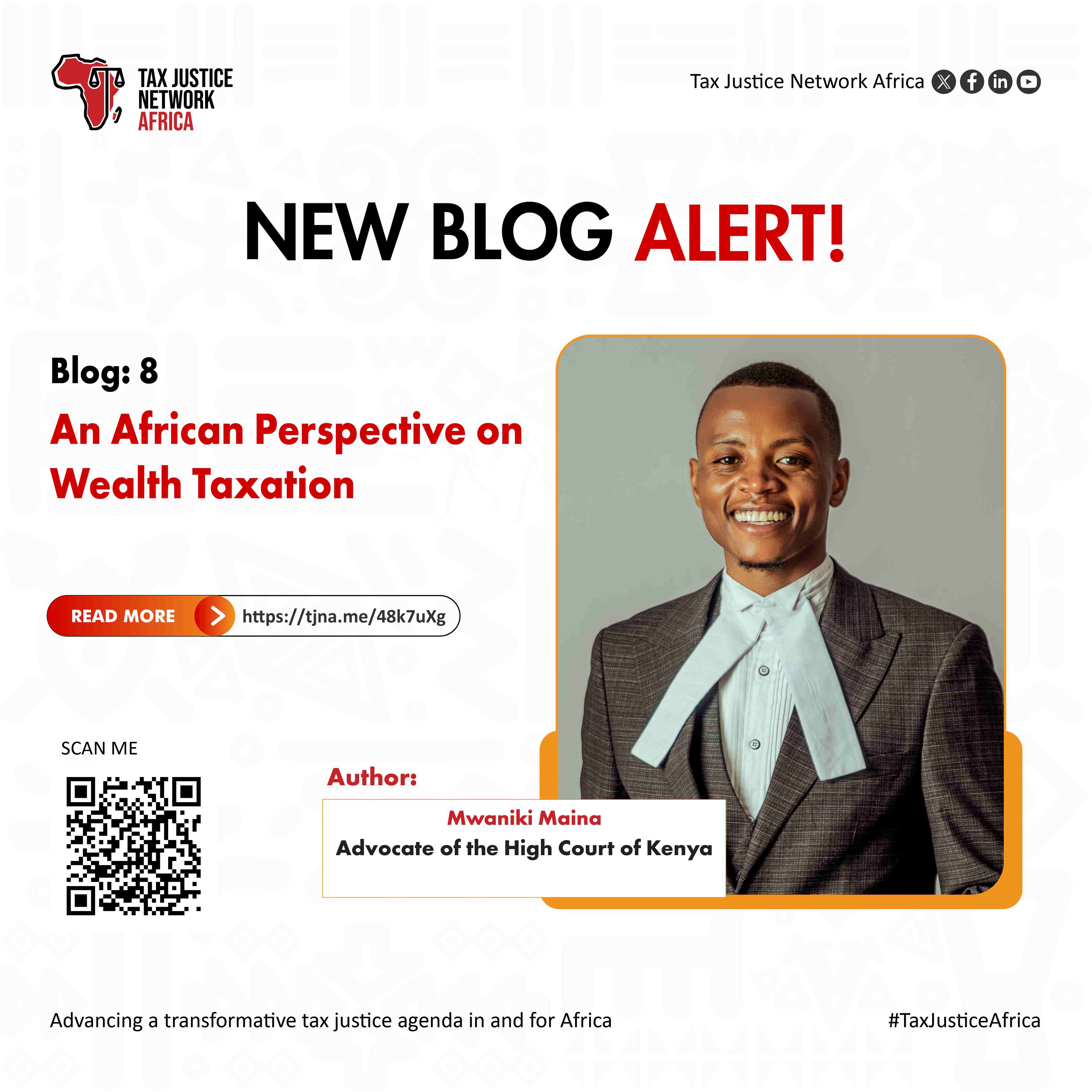
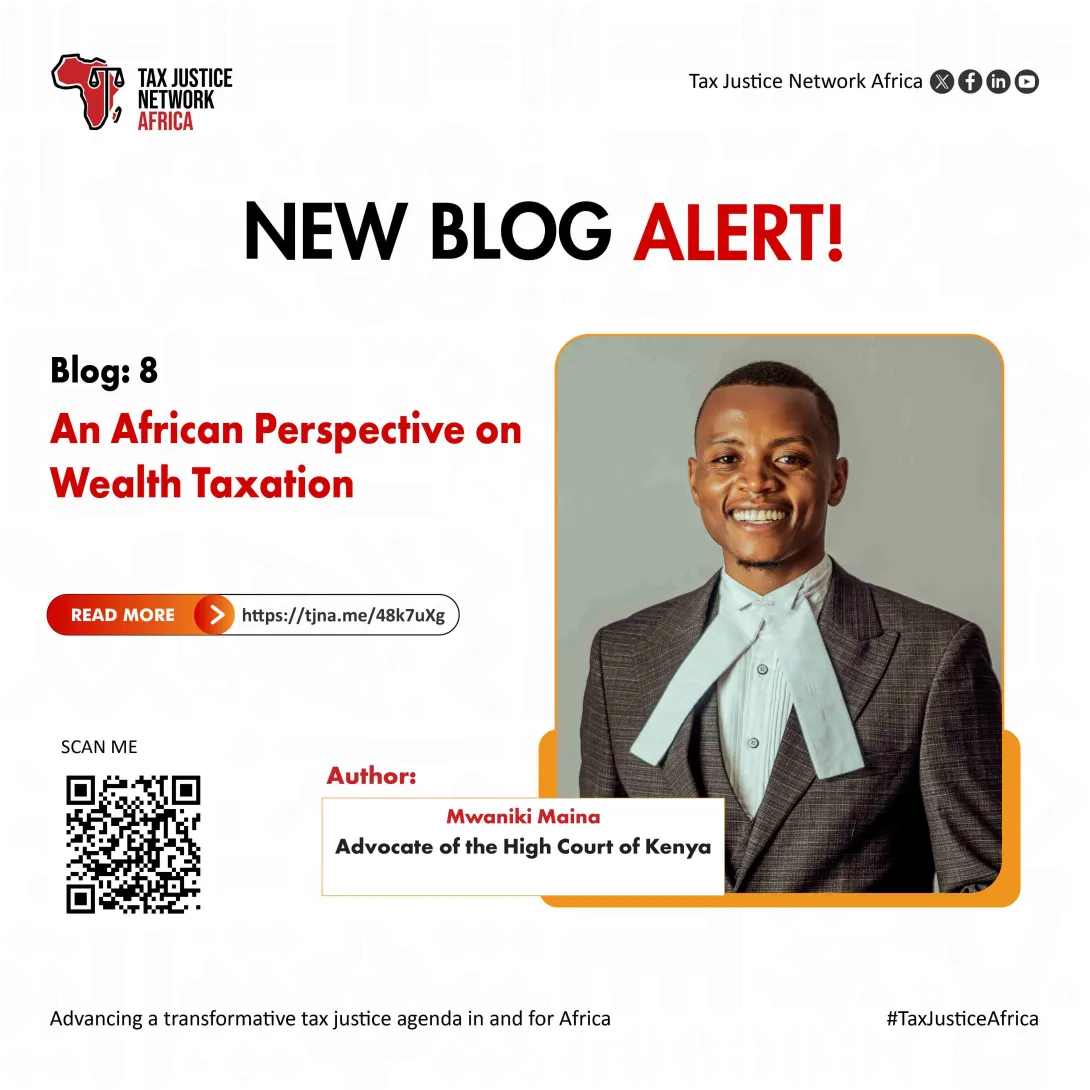
The author of this blog is Mwaniki Maina, an Advocate of the High Court of Kenya.
