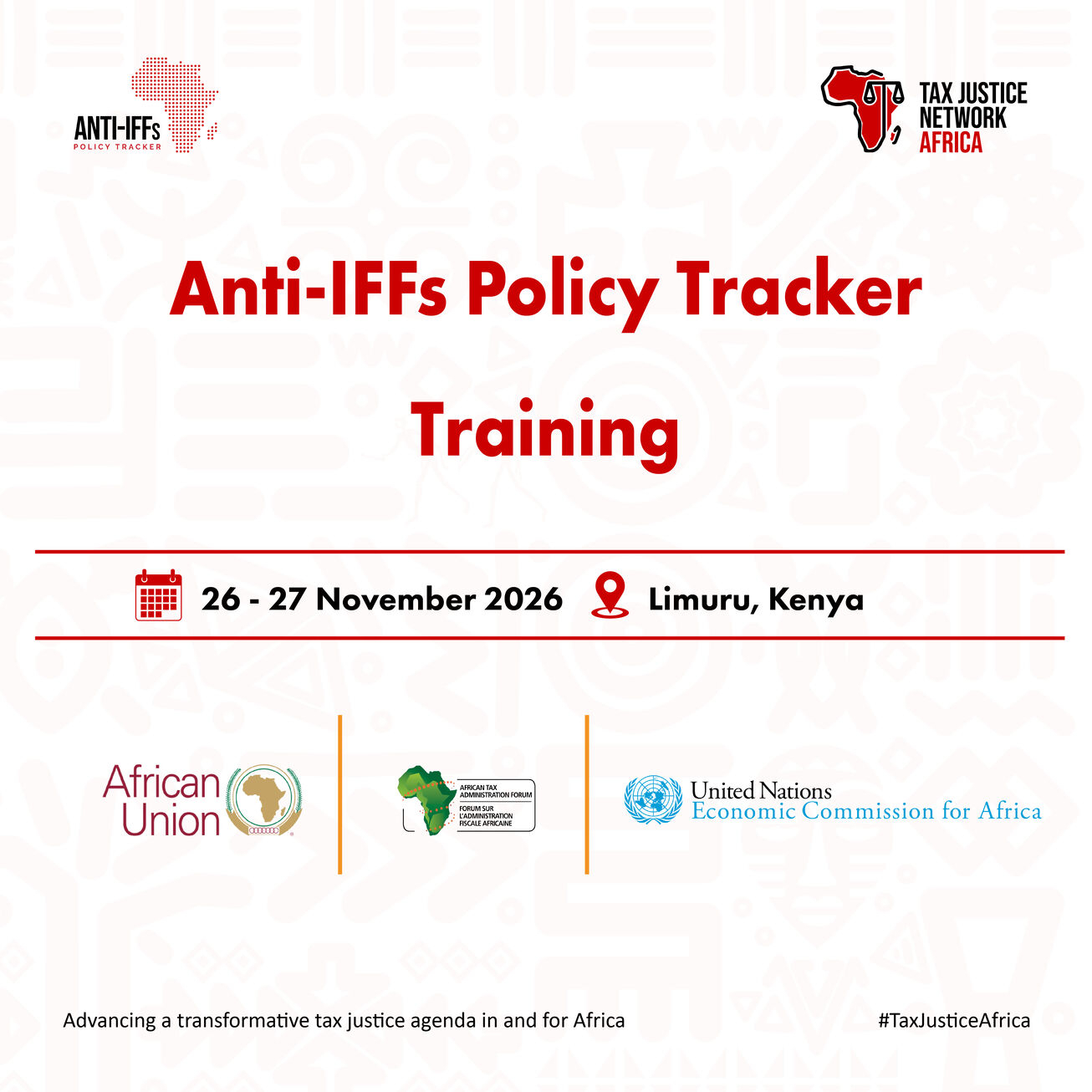


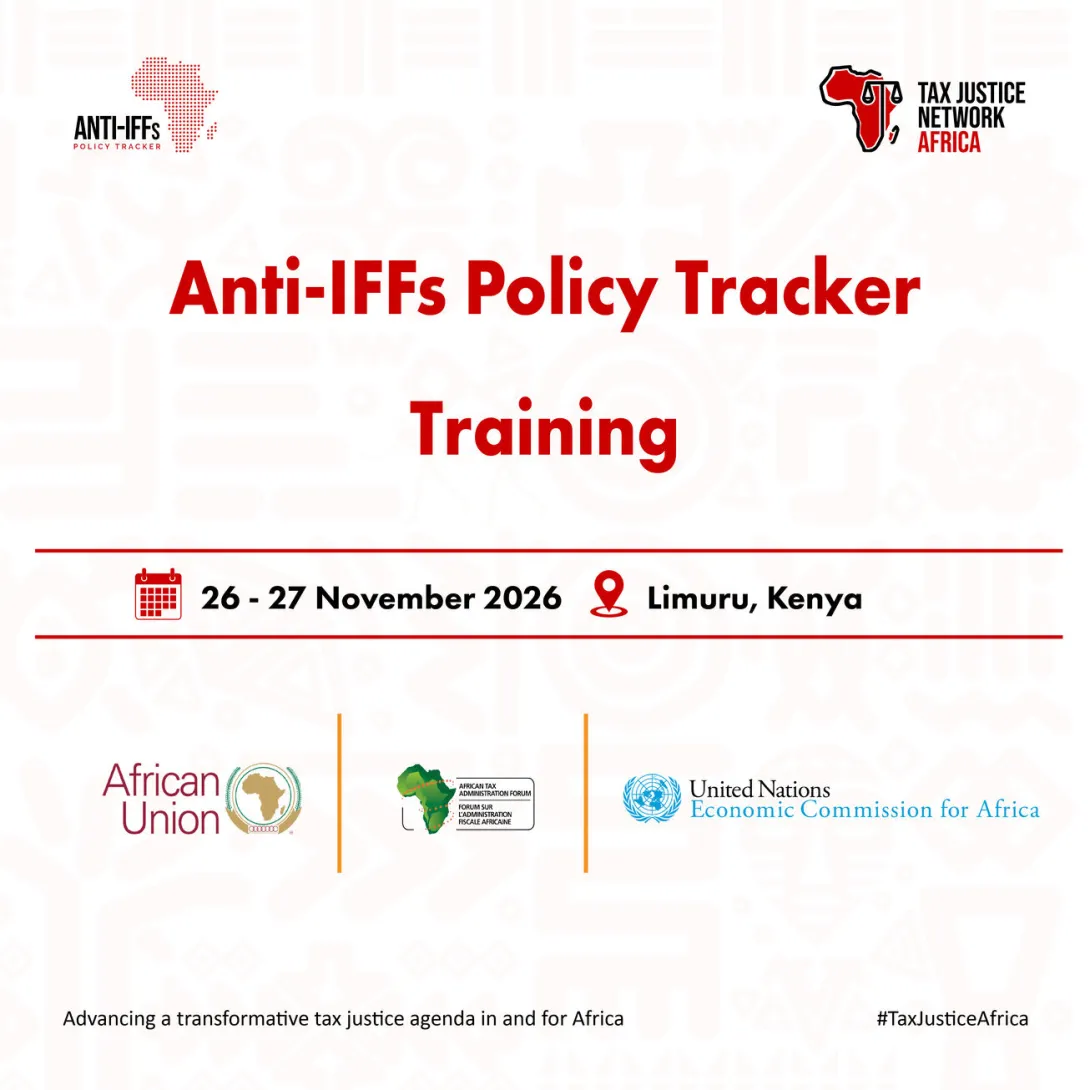
Tax Justice Network Africa (TJNA), in collaboration with the African Union Commission (AUC), the African Tax Administration Forum (ATAF) and the United Nations Economic Commission for Africa (UNECA), will convene a two-day training on implementing the Anti-Illicit Financial Flows (Anti-IFFs) Policy Tracker on 26 –27 November 2026 in Limuru, Kenya. The training marks another important step in advancing the continental rollout of the Policy Tracker, following its successful piloting in six African countries and subsequent endorsement by African Union Member States.
The training comes at a critical stage in Africa's efforts to strengthen national responses to illicit financial flows, which continue to deprive countries of much-needed development resources. With African countries facing growing debt pressures, shrinking fiscal space and increasing demands for domestic resource mobilisation, strengthening the institutions and policy frameworks that safeguard public resources remains an urgent priority.
Developed by TJNA in collaboration with the AUC, through its Department for Economic Development, Tourism, Trade, Industry and Minerals (AUC-ETTIM), and ATAF, the Anti-IFFs Policy Tracker is an African-led self-assessment tool designed to evaluate the strengths and vulnerabilities of national systems for combating tax-related illicit financial flows. The tool assesses countries across four interconnected areas: policy, legislative and regulatory frameworks; institutional frameworks; information and data frameworks; and interagency cooperation frameworks. This approach enables countries to identify gaps, monitor progress, and develop evidence-based recommendations to strengthen national anti-IFF responses.
The Policy Tracker has registered significant progress since its adoption by the African Union Specialised Technical Committee (STC) on Finance, Monetary Affairs, Economic Planning and Integration. Between November 2024 and May 2026, the tool was piloted in Namibia, Uganda, Ghana, Côte d'Ivoire, Liberia and Zambia, generating valuable country-level experiences and lessons to inform its broader implementation. The pilot phase concluded with Zambia's endorsement of the Policy Tracker in May 2026, reinforcing the growing continental commitment to strengthening national systems to combat IFFs.
In June 2026, TJNA, AUC-ETTIM and ATAF convened a stocktaking meeting in Johannesburg, South Africa, bringing together representatives from the six pilot countries and institutional partners to review implementation experiences, refine the assessment methodology and develop a pathway for continental rollout. This momentum was further strengthened in July 2026, when African Union Member States endorsed the continental rollout of the Anti-IFFs Policy Tracker during the joint 9th Session of the STC on Finance, Monetary Affairs, Economic Planning and Integration & 5th Session of the Specialized Technical Committee (STC) on Trade, Tourism, Industry and Minerals held in Abidjan, Côte d'Ivoire.
Building on these milestones, the upcoming training will focus on expanding the pool of qualified assessors to support the Policy Tracker's implementation in additional African countries. It will bring together government focal points from the six pilot countries, TJNA staff and institutional partners to strengthen technical capacity, promote peer-learning and reinforce national ownership of the assessment process.
The training will adopt a practical and participatory approach, combining technical presentations, guided assessments, group exercises and simulations. Participants will be taken through the different stages of implementing the Policy Tracker, including country desk reviews, evidence collection, assessment methodologies, scoring criteria, dashboard utilisation and the development of post-assessment reports.
The training will equally focus on practical simulations, allowing participants to apply the tool in a simulated country assessment, validate findings and develop sequenced reform recommendations. These exercises are intended to equip participants with the technical knowledge and practical experience required to support future country assessments.
Beyond strengthening technical expertise, the training seeks to reinforce the Policy Tracker's sustainability and credibility by positioning government focal points from pilot countries as key contributors to its implementation across the continent. Their involvement will help promote country ownership, facilitate knowledge exchange and strengthen collaboration among institutions responsible for combating illicit financial flows.
As the Anti-IFFs Policy Tracker transitions from piloting to continental implementation, the training represents an important investment in building the institutional and technical capacity required to translate assessment findings into actionable national reforms. Through continued collaboration with African governments and regional institutions, TJNA and its partners aim to strengthen accountability, improve domestic resource mobilisation and advance African-led solutions that safeguard the continent's resources for sustainable development.
For more information, please contact: Aya Douabou at adouabou[@]taxjusticeafrica.net.
